
Why Hire Freelancers Instead of Full-Time Employees? Top Benefits in 2026
In today’s fast-evolving business landscape, more companies are choosing to hire freelancers rather than commit to full-time employees (FTEs). The freelance economy is booming—projections show that by 2027, over 86.5 million Americans (more than half the workforce) will freelance, with freelancers generating trillions in economic impact. Businesses are increasingly replacing or supplementing employees with freelancers for greater flexibility, lower costs, and access to top talent.
But why hire freelancers over full-time employees? Here are the key benefits of hiring freelancers that make them a smarter choice for many modern companies in 2026.
1. Massive Cost Savings: Freelancers vs. Full-Time Employees
One of the biggest reasons companies replace employees with freelancers is cost efficiency. Hiring FTEs involves salaries plus benefits (health insurance, paid time off, retirement contributions), payroll taxes, office space, equipment, and training—often adding 30-50% or more to base salary costs.
Freelancers eliminate most of these overheads:
- No benefits, insurance, or taxes withheld by the employer
- Pay only for work delivered (project-based or hourly)
- No office space or equipment needed (most work remotely)
Recent data shows businesses save significantly on overhead, with many reporting freelancers as more cost-effective for non-core or variable work. In 2025-2026 trends, 65%+ of companies cite cost efficiency as a top reason for hiring freelancers over FTEs, especially after layoffs when firms rehired freelancers to fill gaps without long-term commitments.
Tools like RateCards make this even easier for freelancers—allowing them to present clear, professional pricing via shareable rate cards with built-in payments, so businesses can hire confidently with transparent costs and zero platform subscription fees for the freelancer.
2. Unmatched Flexibility and Scalability
Hiring freelancers gives businesses agility that full-time hires can’t match. Scale up quickly for busy seasons or projects, then scale down without severance, layoffs, or HR headaches.
Freelancers allow rapid team adjustments:
- Ramp up for product launches, marketing campaigns, or seasonal demand
- Downsize effortlessly when needs change
- No long onboarding or notice periods—many start within days
In 2026, with economic uncertainty, 78% of companies value this flexibility to scale without fixed salary burdens. Freelancers often work extended hours or across time zones, accelerating project delivery compared to traditional 9-5 employees.
Platforms such as RateCards empower freelancers to manage multiple income streams from one profile, making it simple for businesses to book them quickly for short-term or recurring gigs.
3. Access to Specialized Skills and Global Talent
Freelancers bring niche expertise without the expense of full-time specialists. Need a top-tier AI expert, graphic designer, or SEO specialist for one project? Hire a freelancer with proven portfolios—no need for ongoing salary when the skill isn’t required daily.
The talent pool is vast and global:
- Platforms host millions of skilled professionals
- Younger generations (Gen Z and millennials) increasingly freelance (44-52% report freelancing)
- Access hard-to-find skills faster than traditional recruiting
Businesses tap into experts who stay current with trends, often outperforming in-house teams on specialized tasks. This is why 72% of companies hire freelancers for niche expertise rather than building internal roles.
Freelancers can showcase their services professionally using tools like RateCards’ link-in-bio system, helping businesses discover and hire talent with clear pricing and instant booking options.
4. Higher Productivity and Faster Results
Many freelancers juggle multiple clients, honing exceptional time management and efficiency. Motivated by project-based pay, they deliver focused, high-quality work without office distractions, unnecessary meetings, or commuting.
Remote work boosts productivity for freelancers, who often complete tasks faster than FTEs spread across ongoing responsibilities. Companies report quicker turnaround times and innovation when hiring freelancers instead of employees.
5. Ideal for Project-Based or Temporary Needs
Not every role justifies a full-time employee. For one-off projects, seasonal work, testing new ideas, or overflow tasks, freelancers are perfect:
- Launch a website redesign or marketing campaign
- Develop an app feature or create content batches
- Handle spikes without permanent headcount
Hiring FTEs for limited-scope work wastes money on unused capacity. Freelancers fit precisely, letting you replace employees with freelancers for non-core functions.
Many freelancers use apps like RateCards to create portable storefronts (via QR code or bio link), streamlining how businesses find, hire, and pay them for these exact scenarios.
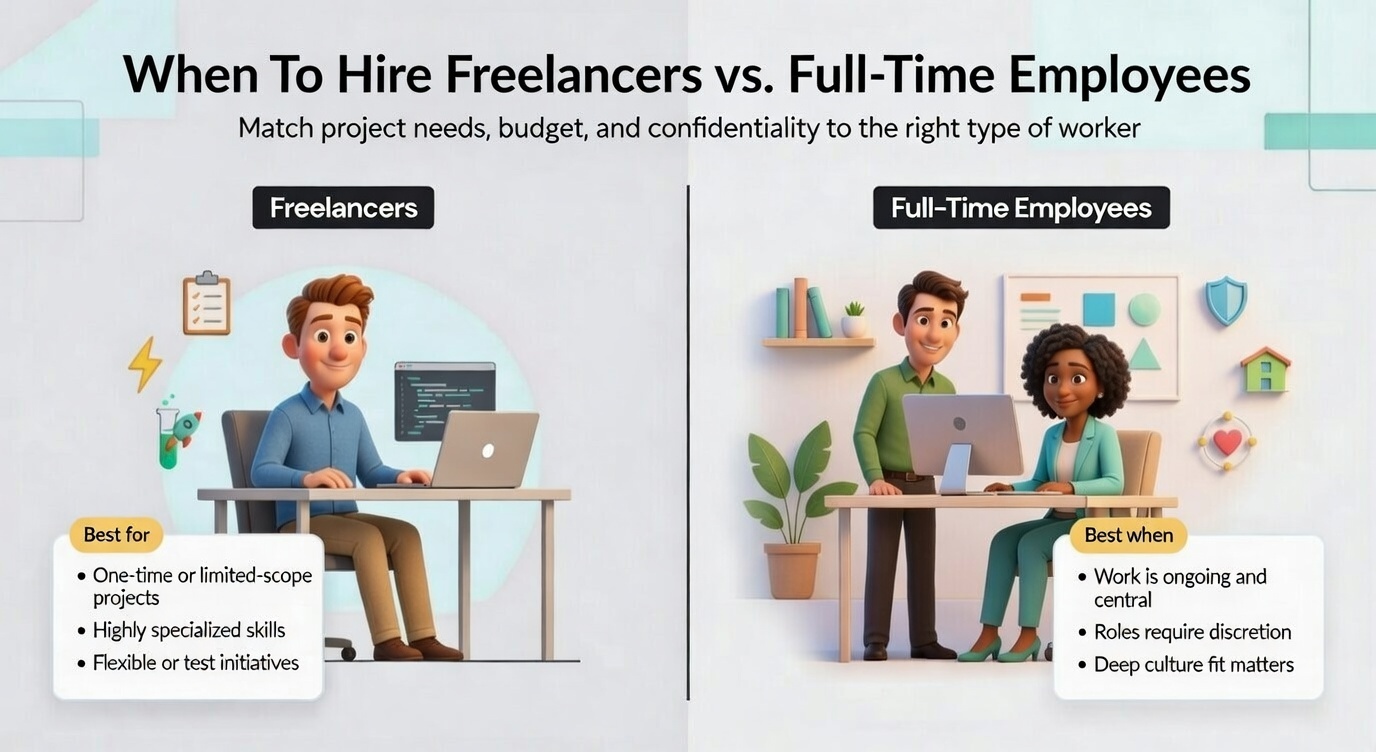
When Freelancers Beat Full-Time Employees (and When They Don’t)
Choose freelancers over FTEs when you need:
- Limited-scope or project-based work
- Highly specialized skills without long-term commitment
- Rapid scalability and flexibility
- Cost control during uncertain times
Avoid freelancers for daily core operations, roles needing deep company knowledge, proprietary info, or strong cultural integration—those suit full-time employees better.
How to Start Hiring Freelancers in 2026
Ready to experience the benefits of hiring freelancers? Look for talent on platforms like Upwork, Fiverr—or discover local and specialized providers through tools like RateCards, where freelancers list services with transparent rates and easy payment integration.
Vet candidates with portfolios, recent references, and trial projects. Always use clear contracts with milestones.
In 2026, hiring freelancers instead of full-time employees isn’t just a trend—it’s a strategic advantage driving growth, innovation, and profitability. By leveraging the freelance economy—and empowering freelancers with modern tools to showcase and monetize their skills—businesses access top talent, cut costs, and stay agile in a competitive world. If your company has variable needs or specialized projects, freelancers (and platforms built for them like RateCards) could transform your workforce strategy.
All Blog Articles ›
0 Comments